

 CN
CN
Ma Family
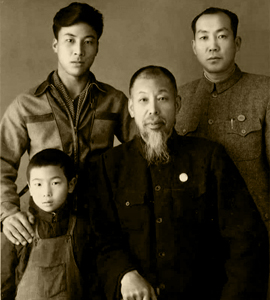
Ma Family
Mashi means "Ma Family". The astronomer Muizz (the Chinese equivalent of the Persian name Muizz is Ma Yize) and his family came to China in the 3rd year of the Jian Long era (963 AD) during the reign of Emperor Zhao Kuangyin of the Song Dynasty (960–1279), upon the emperor's invitation, and contributed to the history of the Song Dynasty. Ma Yize settled in China with his sons and grandsons, spreading across the country and becoming part of China's millennium-long history. Many branches of the Ma family emerged from Ma Yize's lineage, including: Chongluntang Ma Family of Qingxian, Cangzhou region, Qingzhen Dunyuetang Ma Family of Huaining, Anhui region, Zhongshutang Ma Family of Beiping, Enxian Ma Family of Dezhou, Shandong, Chongluntang Ma Family of Tianjin, Guanzhong Ma Family, and others. One of these branches, the Huaining Ma Family of Anhui, is known to have originally resided in Erlonggang, a rural area of Yuhuatai District, Nanjing city. In the early Ming Dynasty (1368–1644), Ma Zhongliang (1373–1437) emerged with a military career and was appointed commander of Pengcheng. After the Jingnan Campaign of Ming Emperor Chengzu, he was assigned as military attaché to Qingxian County, Hebei Province, where he settled with his family. During the Qing Dynasty (1644–1911), the family's prestige gradually declined. It is said that descendants of Ma Zhongliang's third son moved from Qingxian to Yanshiqiao Town (in Mengcun Hui Autonomous County). This is the origin of Ma Fengtu in Yanshiqiao. This lineage is long and rare even among Han Chinese families. The Ma Fengtu’s family, with a strong emphasis on tradition, religion, and their long ancestry, maintained these values and resisted changing times — a fact that significantly influenced their martial arts philosophy.
Ma Yize (921–1005) was born on the 20th of March and passed away on the 10th of May. (Ma Yize is a name derived from the Persian translation of "Muizz." The name carries meanings such as "to honor," "to show respect," and " to venerate."). His life corresponds with the period of the Western Roman Empire. (At that time, the Eastern Roman Empire in Asia Minor was referred to during the Song Dynasty as the country of Lumei.) It also coincides with the periods of the Abbasids (750–1517) and the Ghaznavids (961–1186), as well as the early years of the founding of the Great Seljuk Empire, in what is present-day Turkiye. In Chinese, it is transliterated as Lumu, Lumi, Lumei, and other phonetic versions. It is generally believed that Lumu, or the country of Lumei, has a different translation referring to the Ottoman Empire (al-Imba raturiyyah al-Uthmaniyyah, 1299–1922). From the 3rd year (1524) to the 33rd year (1554) of the reign of Emperor Jiajing of the Ming Dynasty (1368–1644), the Ottoman Empire sent envoys to China five times and engaged in friendly exchanges. The book "Mingshi Xiyu Liezhuan" ("History of the Ming Dynasty – Biographies of the Western Regions") contains a special article that describes the Romans. This theory is based on the belief, recorded in Ming Dynasty history approximately 300 years after the death of Muizz (Ma Yize), that the "Land of the Romans" referred to in ancient texts was, in fact, the Ottoman Empire.
Ma Yize arrived in China in 962, during the 2nd year of the Jian Long era of the Song Dynasty. He held official posts such as Minister of Agriculture judge, astronomical secretary, and astronomy advisor. He authored works such as: Houzhou Guangshun Mingyuanli (Calendar after the Week, Vol. 1) and Taiyiqing Hujiayinjing (Night Timing in Early Years, Vol. 1). Between 962 and 963, he compiled the new Yingtianli calendar (Song Dynasty New Calendar), adding 10 days to the 4-year cycle. The calendar was issued by the decree of Emperor Taizu of Song. The Yingtianli Calendar had six volumes: Lijing (Calendar), Suanjing (Calculations), Wugengzhong Xinglicheng (Fifth Revision of Star), Chenhun Fenlicheng (Twilight Phases), Zhouye Richuru Licheng (Sunrise into Day) and Guying Licheng (Sundial Time). This was the first calendar method in China to introduce a week system, and it is recorded in Songshi (History of Song, Vol. 68 - History of Song Laws). The name Muizz is Persian, and Ma Yize is its Chinese translation. Emperor Zhao Kuangyin gave him the surname Ma (possibly a contraction of Muhammad or meaning horse) and the title Yusou ("Old Fisherman"). For his scholarly contributions, he was honored with titles such as: Gunglu Doctorate of Astronomy, State’s Right Pillar, Qintian Secretariat, Title of Xihoujue. Recognized by the Jingbiao, he was awarded an official governmental recognition plaque. Later, he settled in Jingyang, Shanxi Province, becoming the ancestor of the Hui (Muslim) Ma family in China. Ma Yize’s eldest son, Ma Eceng, received the Xihoujue title in the 2nd year of Emperor Zhao Guangyi (997) and became the director of the Sitianjin Astronomy Bureau. His second son, Ma Huaiyu, was appointed as deputy director of the Delang and Sitianjian institutions in 1001 (4th year of Emperor Zhao Hengxian) by imperial decree. In the 22nd year of Emperor Xiangzong of the Ming Dynasty (1486), the Ma family of Qingxian, Hebei compiled their genealogy, establishing a recorded lineage for Chinese Muslims. In 1968, during a trip to North America, Taiwanese national historian Luo Xianglin from Xingning, Guangdong Province, discovered the Huaining Ma Family Genealogy in the East Asia Library of Columbia University. After publishing an article, expert studies confirmed that Ma Yize had introduced Islamic mathematical astronomy to China, translating works such as: The star catalogue Al-Zij by Abu Abdallah al-Battani (858–929), The Sabian astronomical tables Zij al-Sabi (with the earliest post-Ptolemaic data on solar apogee movement), Kitab Matali’ al-Buruj (Mathematical Astronomy) and Kitab Akdar al-Ittisalat. These later were translated into Latin. Contemporary Islamic works include those by Yemeni geographer and astrologer Al-Hamdani (900–950), such as the Zij star catalog and Kitab Sarair al-Hikma. Ma Yize’s descendants came from Yongan Town, Jingyang. In the 2nd year of Emperor Ningzong (1196), the 42nd famous warrior and 11th-generation descendant Ma Ganjie was appointed governor of Nanyan during Emperor Lizong’s 5th year (1232), later being included in Xinye County records, thus founding the Xinye (Miaoyuantang) Ma Family. From that point, several branches developed: Dunyuetang Ma Family of Huaining, Anhui, Huaiyuantang Ma Family of Xiangyang, Hubei, Chongluntang Ma Family of Tianjin, Qingxian Ma Family of Hebei, Enxian Ma Family of Shandong, Zhongshutang Ma Family of Beijing. At the end of the Yuan Dynasty (1279–1368), members of the Xinye Ma Family joined the Hui (Muslim) Army in Henan Province, beginning their military careers. At the start of the Ming Dynasty, under Emperor Hongwu (1368–1398), the region was divided into three guard posts. Among them: Ma Hazhi (Ma Lin), who served in the Anqing Guard, became the ancestor of the Ma Family of Huaining during the Ming Dynasty and Ma Zhongliang, commander in Pengcheng, became the ancestor of the Northern Ma families of Hebei Qingxian, Shandong Enxian, Beijing Zhongshutang.
Ma Zhongliang (1373–1437), also known as Ma Xingci, was the 18th-generation descendant of Ma Yize, the first ancestor who came to China during the Song Dynasty. After the Jingnan Campaign in 1404 during the Ming Dynasty (1368–1644) under Emperor Chengzu, he left his hometown in the rural Erlonggang area of Yuhuatai District, Jinling (modern-day Nanjing) to defend Jingji city in Zhili (northern China). He and his family were stationed in Haopo, Qingxian, officially registering Qingxian city. He served as Commander of Pengcheng (Beijing) and was honored with a Fengzheng Doctorate. Ma Zhongliang was born in the 6th year of Hongwu (1373) and died in the 2nd year of Zhengtong (1437), becoming the founding ancestor of the northern Ma families during the Ming Dynasty (including Hebei Qingxian, Shandong Enxian, and Beijing Zhuizhi branches). His second-generation descendants inherited official positions and were posthumously granted the same ranks, proving that two generations held official government posts. After the passing of the second-generation ancestor, his grandmother Han moved the five sons and the family to the Majiaqiao cemetery in Qingxian (originally Hanjiaqiao, the hometown of grandmother, Han’s mother-in-law, later renamed Majiaqiao). They are buried north of Haopo village.
Ma Fen (dates of birth and death unknown) was from the Ma family of Yangshiqiao Town, Cangxian City. His ancestors were a specialized military family during the Ming Dynasty (1368–1644) and had a long-standing background in martial arts. This family became known at the end of the Qing Dynasty (1644–1911) as masters in the Piguaquan and Bajiquan styles. Ma Fen was an expert Wushu practitioner in the Qiangshu spear style. He used his skills to enter Guandong on his own and founded the renowned Gongsheng Guard Bureau in Shenyang. He was generous, kind, helpful, and a brave warrior, earning a strong reputation in northwest China.
Mashi Wuyi (Ma Family Martial Arts) First Generation — Ma Jieyuan and Ma Lianyuan:
The second-generation Ma Jieyuan and Ma Lianyuan brothers represent the first generation of the Ma family martial arts tradition.
In the late Qing Dynasty (1644–1911) and early Republic of China era (1912–1949), the Ma brothers from Yangshiqiao Town, Ma Jieyuan, Ma Lianyuan, and Ma Jieyuan’s son Ma Huatang, formed the first generation of the second lineage. Ma Jieyuan and his brother Ma Lianyuan were village martial artists obsessed with Wuyi (martial arts) and led their nephews in training. Ma Jieyuan and his son Ma Huatang had intense contact with martial arts masters from cities like Cangzhou, Yanshan, Nanpi, and Qingxian, significantly enhancing their skills and knowledge. Later, they became disciples of Grandmaster Huang Linbiao, receiving training in Piguaquan and Bajiquan, based on Tongbei theory. Ma Jieyuan specialized in traditional martial disciplines such as Shuaijiao (wrestling), Dangong (archery), and Yumashejian (horseback archery), earning high respect in his hometown. His son, Ma Huatang, trained in the second form of Bajiquan and Piguaquan, was extremely strong, highly skilled in swordsmanship, and known for his reserved bravery. The footprints of these two generations were visible across Cangzhou and Nanpi. The Ma brothers traveled multiple times to Guanlong (an area in eastern Gansu), bravely advancing in martial arts despite many hardships and obstacles. However, most of their martial activity remained in their hometown, where they eventually aged and retired. As a result, the foundation of the first generation of Ma family martial arts remained rooted in local fighters. They are considered the founders of the Mashi Wuyi (Ma Family Martial Arts) system. The Ma family was not wealthy. Among their ancestors was the legendary martial artist Ma Fen, who crossed Guandong through martial prowess and later single-handedly founded the renowned Gongsheng Guard Unit in the Fengtian region during the late Qing Dynasty. Later, during the time of Ma Fengtu and Ma Yingtu, when they were in northeastern China, they benefited from the prestige of these renowned ancestors. In the early period of the Republic of China (1912–1949), many martial arts masters emerged from Cangzhou, building lives for themselves through Wushu wherever they went. Among these distinguished individuals were Wang Ziping and Tong Zhongyi. With the transformation of Wushu into a sport, they played an important role in its institutionalization under the name Guoshu (national arts) and became widely known across the martial arts world of the Chinese state.
Mashi Wuyi (Ma Family Martial Arts) – Second Generation: Ma Fengtu and Ma Yingtu
The third-generation brothers Ma Fengtu and Ma Yingtu represent the second era of the Ma family martial arts tradition.
Ma Fengtu (1888–1973), also known as Ma Jianyi, was the elder brother. During this era, the Ma brothers left their hometown and entered the Chinese martial arts scene, becoming a living part of Wushu history. Geographic and cultural factors played a major role in shaping the Ma family's martial arts tradition. Another defining feature was how this family's destiny—through the unique cultural expression of martial arts—became deeply intertwined with the fate of the Chinese people over centuries. This gave rise to the family’s strong patriotic spirit and its magnificent legacy. During the Qing Dynasty under Emperor Xuantong (1909–1912), while studying in Tianjin, Ma Fengtu joined Yan, the Zhili Province branch of the Tongmenghui (Chinese Revolutionary Alliance). He actively participated in anti-Qing activities. As a skilled martial artist and a courageous individual, he was promoted to be a member of the Tiexue (Iron Blood) Group, taking part in numerous secret missions. Following orders from the Tongmenghui, he worked to unite martial artists from northern China and established the Zhonghua Wushihui (Chinese People's Martial Arts Association), which echoed the Japanese Bushido spirit. As a representative of this association, he once competed in a Jijian (sword fencing) match with a Japanese Kendo teacher at a school in Tianjin, winning all three rounds. Ma Fengtu's patriotic spirit deeply influenced his brothers and descendants—this played a crucial role during the later War of Resistance Against Japan.Once the war began, Ma Fengtu and his four brothers all participated in the great national liberation struggle from different fronts. This level of familial commitment is extremely rare in modern martial arts families.
Second brother Ma Yingtu (1898–1956), also known as Ma Jianxun (or Ma Zuoxiong), spent his entire life in military service. While serving in the anti-Japanese army, he worked as a Wushu training officer under Sun Lianzhong and Liu Ruming. He fought in multiple battles against the Japanese. In 1938, he served as an instructor in Sun Lianzhong’s military training corps and took part in the famous Battle of Taierzhuang. For his bravery and decisive leadership, he was commended by Sun Lianzhong and awarded a captured Japanese sword.
The third brother, Ma Changtu, joined the Communist Party-led Muslim detachment in Central Hebei after the war began. After conducting covert operations in Qingxian, Nanpi, and Tianjin, he was discharged due to injuries.
The fourth brother, Ma Ruitu, joined the 68th Division of Liu Ruming’s Northwestern Army during the war. Diligent and dedicated, he excelled in Wushu and Shuaijiao (wrestling), earning admiration in every battle and eventually being promoted to reconnaissance squad leader. In March 1938, while fighting Japanese forces in southern Henan Province, he was shot and killed heroically during a mission in Tanghe to apprehend sick prisoners. General Liu Ruming was deeply saddened by Ma Ruitu’s death. Chief of Staff Li Zhenyi delivered Ma Ruitu’s personal effects to his family and sent a condolence letter to Ma Fengtu, explaining the circumstances.
At the time, Ma Fengtu and Ma Yingtu were known across northern China as the “Mashi Shuangxiong” (The Two Heroes of the Ma Family). They elevated the Ma family's Wushu tradition to new heights, securing its place in the Chinese martial arts world under the name Mashi Wuyi (Ma Family Martial Arts). It spread widely throughout northwest China, with a speed and scale of development rare in martial arts history. Several noteworthy reasons contributed to this legacy. Ma Fengtu adopted Grandmaster Huang Linbiao’s Tongbei theory and system, improving the quality of the martial arts. From then on, there was a clear source of knowledge and a defined learning objective. This shift in mindset led to greater tolerance and openness, laying the foundation for the growth of the Ma family’s martial arts career. This was a critical theoretical milestone. As previously mentioned, the brothers' journey from towns like Cangzhou and Nanpi demonstrated how martial arts had reached broader regions and higher levels. Their extensive connections with other martial artists and their commitment to embracing the classical treasures of traditional martial arts significantly expanded the Tongbei martial system. The Ma brothers also actively embraced the modern physical development of Wushu, contributing to the construction of the Guoshu (national arts) system. With high-level beginnings and broad vision, they helped liberate Wushu styles across China from outdated habits and mysticism.
Mashi Wuyi (Ma Family Martial Arts) – Third Generation: Ma Yingda, Ma Xianda, Ma Lingda, Ma Mingda
The fourth-generation brothers Ma Yingda, Ma Xianda, Ma Lingda, and Ma Mingda represent the third era of the Ma family martial arts tradition.
This third era is known in the martial arts world as “Mashi Sijie” (The Four Ma Brothers of Martial Arts) and is represented by the sons of Ma Fengtu. Ma Yingda passed away in July 2000. Ma Xianda passed in June 2013. Ma Lingda passed in December 2022. Today, Professor Ma Mingda, the youngest of the four, continues the family’s legacy.
Mashi Wuyi (Ma Family Martial Arts) – Fourth Generation: Ma Lianzhao, Ma Lianyue, Ma Lianlun, Ma Lianpo, Ma Lianzhen, etc.
The fifth-generation martial artists—Ma Lianzhao, Ma Lianyue, Ma Lianlun, Ma Lianpo, Ma Lianzhen, and others—represent the fourth era of the Ma family martial arts tradition.






Tongbei Wuyi
Copyright © International Tongbei Wuyi Union