

 CN
CN
Bajiquan
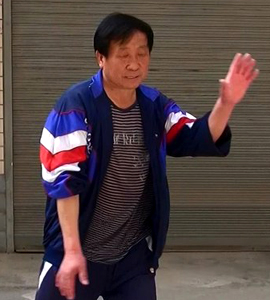
Ganggong Bashi
Ganggongbashi means the 8 techniques of Tongbei's strength training exercise. Ganggongbashi is a systematic practice style of Yaougongquan (Youth Exercise Style), involving the hands, vision, body, and stepping. It is the correct way to begin martial arts training and provides rapid progress. Ganggongbashi was compiled and created by the great master Ma Fengtu. During the creation and organization based on Tongbeijing (internal power of Tongbei), it also incorporated concepts from other martial arts styles. Each of the 8 sections consists of two practice movements one for attack and one for defense. For beginners, practicing the Jingdao power stepping movements is very beneficial for adjusting the spirit and energy. Even practitioners who have been training martial arts for many years return to practice Ganggongbashi. However some tend to overlook it. because it is easy to learn and apply. In fact, these 8 movements are highly practical and best reflect Bajiquan’s so-called “Gongda Bujianli (illogical fighting style).” Those who practice the Ganggongbashi form regularly will quickly improve their skills.
The Movements of Ganggongbashi
1- Chengchui Mabuzhuang, 2- Xiepi Shouzhongkan, 3- Pipa Shizuanquan, 4- Pishan Zhangshandian, 5- Xianglong Chaotianzhang, 6- Fuhu Zhangzujian, 7- Boada Shizichui, 8- Duobu Chuozhijian.
Liukai Bazhao
The "opening door" of Bajiquan is based on the Liukai and Bzhao.
Liudakai
Liudakai means 6 great opening, forming the foundation of Bajiquan. Those who refer to Bajiquan as Kaimen (Open Door), are based that to Liudakai (6 Big Opening). "Kai (open)", meanings opening opponents every move, "Fangshou Jiazi" (Defensive Roof Form). Liudakai,is every necessary move for opening opponents moves. In example, the openings are the 6 moves of Ding (elbow strikes), Bao (hugging movements), Dan (shoulder strikes), Ti (lifts), Kua (carrying in arms), Chan (surrounding).
The Movements of Liudakai: 1- Dingfa, 2- Baofa, 3- Danfa, 4- Tifa, 5- Kuafa, 6- Chanfa.
Badazhao
Badazhao means "8 Major Applications" and forms the core structure of the Bajiquan style. All Bajiquan forms are developed based on Liudakai and Badazhao. These eight applications represent the main offensive methods and are generally regarded as the foundation of Baji Sanzhao (8 Pole Free Applications).Bajiquan practitioners consider the techniques within Badazhao to be their most effective movements. They include: Yanwang Sanjianshou (Seeing hand technique 3 times), Yingmen Sanbugu (Ignoring incoming technique 3 times) Huangying Shuangbaozhao (yellow eagle’s dual embracing catch) Menghu Yingpashan (tiger’s aggressive mountain climb), Bawang Yingzhejiang (King forcefully turns the crown toward the river), Yingfeng Chaoyangshou (rising hand against the wind) Yingfeng Chaoyangshou (The hand rising toward the sun against the wind), Tongtian Lianhuanpao (Chain cannon punches reaching heaven),Zuoyou Yingkaimen (strong opening from both sides). These movements are deepened through the Bajiquan methods of Jingdao (power expression) and Jifa (technical methods). Every movement can be repeated and varied; when executed skillfully, each action aligns with the principle of "Da" (great or expansive).
The Movements of Badazhao: 1- Yanwang Sanjianshou, 2- Yingmen Sanbugu, 3- Huangying Shuangbaozhao, 4- Menghu Yingpashan, 5- Bawang Beizhejiang, 6- Yingfeng Chaoyangshou, 7- Tongtian Lianhuanpao, 8- Zuoyou Yingkaimen.
Bajiquan
Bajiquan, also known as the Eight Extremes Fist, or alternatively Kaimen (Open Door) or Yueshan (High Mountain) Baji style. Those who refer to it as Kaimen believe it is based on 6 types of Kaifa (open methods), also known as Liudakai (6 great openings), which are essential for breaking the opponent's defense through the "Fangshou Jiazi (roof defense form)." Those who refer to it as Baji (8 extremes) refer to the expressions of "Jiuzhouzhi Waiyou Bayin (8 secret beyond the 9 continents), Bayinzhi Waiyou Bahong (8 secret beyond the 8 heavens), and Bahong Waiyou Baji (8 heavens beyond the 8 poles)," symbolizing the idea of "8 poles from 8 directions." The name Yueshan (High Mountain) comes from the legend that the origins of Bajiquan were at the Yueshan Temple in Jiaozuo, Henan province.
The roots of Bajiquan involve many contributors. One story is that Wu Zhong learned from Zhang Yueshan from Henan. Wu Zhong then taught his daughter Wu Rong. Later, the Wu family moved to Mengcun village in Canxian County, Hebei province, where Bajiquan spread. After Wu Rong, Bajiquan split into two branches, which began to be taught. The first branch was passed down through Wu's family and their students to today. The masters who had more deep knowledges like Wu Nan, Wu Shike, and Ma Fengtu caused it to spread further. The second branch is Wang Si who learned it from Mengchun and taught to Zhang Keming of Loutan. Zhang Keming, taught his son Zhang Jingxing and student Huang Sihai. Zhang Jingxing's most effective students included Li Shuwen, Ma Yingtu, Han Huachen, and Zhang Yuheng. After Li, Ma, and Han, Bajiquan began to spread from Mengcun across China.
In Bajiquan, there are several core forms based on the 6 great openings (Liudakai) and the 8 great applications (Badazhao), such as Baji Xiaojia (8 pole small roof), Bajiquan (8 pole fist), Bazhenquan (8 formation fist), Baji Duijie (8 pole dual confrontation), Liuzhoutou (6 elbow strikes), and weapon forms like Tiliudao (Rising Willow Sword), Xingzhebang (Walking Man Staff), and Liuhe Daqiang (6 Harmonized Great Spear).
Baji Xiaojia
Baji Xiaojia means the Small Frame/Form of the Eight Extremes, and it is one of the forms of the Tongbei Bajiquan style. It is considered the fundamental form of the Bajiquan system, it's a type of Jiazigong (basic form training). In learning the Tongbei Bajiquan style, everything begins with Xiaojia (the Small Frame Form). Its foundational movements include: Limen Dingzhou (inward elbow strike), Kaigongshi (opening like a bow movement), Chuaidang (keeping the groin tucked in), Dayinzhang (striking the sun with the palm), Xiaochan (narrow circling). Important aspects are Panlian Jiashi (rolling roof posture), Mala Doufa (a sudden burst after a slow pull), Kongshi Diaojing (controlled distribution of power).
Bajiquan
Bajiquan means “Eight Extremes Fist,” and is also known as Baji Dajia. The solo practice of the Bajiquan style is referred to simply as Bajiquan, while the partnered or two-person practice is called Baji Duijie. The main hand techniques include: Huoda Dingzhou (scraping elbow strike),Zuoyou Tida (lifting and striking with both sides), Chuaidang (keeping the groin inward), Tuochuang (supporting the window), Zhuanhuanzhang (rotating palm strike), Dachan (wide circling), Xiaochan (arrow circling), Kuata (swinging over the arm), Guixi (neeling down onto one knee), Pumianzhang (palm strike), Luobuza (stomping down with a falling step).
Bazhenquan
Bazhenquan means “Eight Battle Formation Fist” and represents the essence of the Bajiquan style. It originated in Hebei province and has been around for several centuries. Later, after being studied and refined by the great master Ma Fengtu, a unique style emerged that forms the essence of Tongbeijing (the inner power of Tongbei). It is a distinct form such as Xiaojia (Small Frame Form), Dajia (Large Frame Form), Baji Duijie (Eight Extremes Two-Person Confrontation), Fanziquan (Rotating Style), Piguaquan (Chopping and Swinging Style). The power expressed during practice is vigorous, as soft as cotton, and as hard as steel thus embodying the true core of combat effectiveness. The skillful use of Tongbeiquan’s power and elegance balances the functions of Yin and Yang, and through long-term practice, the practitioner can greatly strengthen the body.
Baji Duijie
Baji Duijie means “Eight Extremes Paired Encounter” and is the core two-person form of the Bajiquan style. At its heart are six foundational Kaifa (opening) techniques, Ding (carrying over the head), Bao (hugging), Dan (carrying with the shoulder), Ti (lifting), Kua (carrying over with arm), Chan (circling). These are combined with internal power expressions such as: Zhuangkaojing (collision power), Benghanjing (sinking power), Tujijing (offensive power). The form is a fusion of these methods with Sanzhao (free application techniques), forming a comprehensive training for real combat scenarios. Key hand techniques include: Huoda Dingzhou (scraping elbow strike), Zuoyou Tida (lifting and striking from both sides), Chuaidang (protecting the groin), Tuochuang (supporting the window), Zhuanhuanzhang (rotating palm strike),Dachan (wide encircling), Xiaochan (narrow circling), Kuata (swinging over the arm), Guixi (kneeling down), Pumianzhang (palm strike), Luobuza (stomping down with a falling step). The power application in Duijie is vigorous, the combat practice is realistic, and the emphasis lies on pressured exchanges of attack and defense. Key features are rotational leaning and grabbing, clear impacts, stable low stances with coiling footwork.
Liuzhoutou
Liuzhoutou means “Six Elbow Points.” In the Bajiquan system, it refers to 36 techniques applied in various directions, including: Shang (up), Xia (down), Qian (front), Hou (back), Li (inward), Wai (outward), and Zhou (elbow). These techniques are divided between the left and right sides of the body. Liuzhoutou is a paired training method consisting of 6 types of punches and 6 types of elbow strikes.
The 6 Punches: Shangbu Zhongchongquan (Advancing straight middle punch), Youshang Zuanquan (Drilling punch to the right), Zuoshang Zuanquan (Drilling punch to the left) Shangbu Yinquan (Advancing downward punch) Youfan Zaquan (Rotating crushing punch to the right) and Zuofan Zaquan (Rotating crushing punch to the left).
The 6 Elbow Strikes: Shangbu Lanzhou (Advancing blocking elbow) Ceshen Jiezhou (Cutting elbow from a side stance) Youshang Guazhou (Hanging elbow to the right), Zhengzhong Pingzhou (Straight elbow to the center), Dianbu Baozhou (Hugging elbow from a point stance) and Shoushen Dingzhou (Withdrawing steady elbow).






Tongbei Wuyi
Copyright © International Tongbei Wuyi Union