

 CN
CN
Ma Fengtu
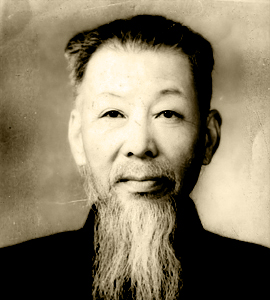
Ma Fengtu
Ma Fengtu (1888–1973), also known as Ma Jianyi, was a 3rd-generation member of the Ma family and a 4th-generation inheritor of Tongbei Wuyi. He was a Muslim from Yangshiqiao Village, Dongnan Town, Cangxian City, Hebei Province (present-day Mengcun Hui Autonomous County). In his childhood, he learned Piguaquan and Shuaijiao from his grandfather Ma Jieyuan and his father Ma Huatang, as well as Qinglongquan and Bajiquan from his uncle Wu Maotang, and advanced Bajiquan styles from the grandmaster Wu Shike.
In 1899 at age 11, he trained under Grandmaster Huang Linbiao, learning Tongbei Dajiazi, Shierdatangzi, Piguaquan, and Qinglongquan hand techniques, as well as the weapon styles of Luheqiang, Shuangshoudao, and Xuanhuajian. This system was part of the Tongbeixue lineage, recognized through Li Yunbiao, Xiao Hecheng, and Huang Linbiao.
In 1904, he and his brother Ma Yingtu left Yangshiqiao and went to Luotuan, considered the sacred land of Bajiquan, located 3–4 miles away. There, they became students of Master Zhang Jingxing.
In 1909, Ma Fengtu enrolled as the first scholar at the Tianjin North Foreign Teachers' College. He joined Yan, the Zhili Province branch of the Tongmenghui (also referred to as Yanmeng), which was led by Sun Zhongshan (Sun Yat-sen) and engaged in numerous underground revolutionary activities.
In 1910, following orders from the Tongmenghui and through its members' cooperation, he co-founded the Zhonghua Wushi Hui (Chinese Warriors Association) to oppose Japanese samurai influence. He co-founded the organization with Xingyiquan masters Ye Yunbiao and Li Cunyi, Bajiquan master Li Shuwen, and Taijiquan master Li Ruidong, serving as the vice president and instructor.
After 1912, he traveled to northeastern China with Bajiquan master Han Huiqing, where he collaborated with prominent martial artists in the Shenyang (Fengtian) region, including the renowned "Three Elders of Fengtian": Hao Mingjiu, Hu Fengsan, Yang Junfeng, and also Tanglang (Mantis Fist) master Cheng Dongge from Shandong. Ma Fengtu developed a strong martial arts and personal bond with Hao Mingjiu and Cheng Dongge. He learned Fanziquan and Chuojiao from Hao Mingjiu and Hu Fengsan, and Tanglang Jiushou from Cheng Dongge. In return, he taught them Piguaquan, Bajiquan, Luheqiang, and Tongbeijian. While serving as an instructor in Tianjin, he represented the Chinese People’s Martial Arts Union in a competitive test match against Japanese Kendo practitioners, using Jijian he won the match in the third round.
In 1920, Ma Fengtu returned to his village to focus on agriculture and farming and began teaching martial arts and traditional Chinese medicine.
In 1923, due to a severe drought in his hometown, he went with his brothers Ma Yingtu, Ma Changtu, and his eldest son Ma Guangda to join Feng Yuxiang. After meeting Feng in Beijing, they took up positions at the Tax Inspection Office in Tongxian.
In 1924, at the Wushu Research Center of Feng Yuxiang's military division (co-established with Zhang Zhijiang in Zhangjiakou), Ma Fengtu served as director of Bairenzhanshu (close combat tactics) and wrote the Bairenzhanshu manual. During this time, together with his brother Ma Yingtu, he authored instructional books for the Fengmogun staff and the third form of Piguaquan (Feihuquan), as well as a manual on the Pofengbadao saber for the Northwestern Chinese Army.
In 1926, following Feng Yuxiang's defeat at Nankou, Ma Fengtu withdrew westward with Liu Youfen's unit, moving through Ningxia to Gansu. Meanwhile, Ma Yingtu went with Zhang Zhijiang to Nanjing to help establish the Central Guoshu Institute of China.
Later in 1926, as the Chinese military gained control of the northwest, Ma Fengtu began working in military and political circles.
In 1929, after Zhang established the Central Guoshu Institute in Yexian, Ma Fengtu founded the Gansu Provincial Guoshu Institute and served as its president.
From 1933 to 1935, he founded Guoshu Institutes in Gansu and Qinghai, serving as vice president of both.Ma Fengtu’s eldest son, Ma Guangda, an expert in sword styles, served in Feng Yuxiang’s unit in the weapons division and was martyred during the resistance at the Great Wall.
In 1940, after settling in northwest China, Ma Fengtu established Tongbei Wuyi, centered on Piguaquan from Yanshan and Bajiquan from Luotuan.
After 1945, he worked as an assistant professor in the Physical Education Department of the Northwest Teachers College, where he developed the fourth form of Piguaquan, named Taishuquan. He also opened a medical clinic and became known as “Doctor Ma” (Ma Dafu) in Lanzhou.
In 1947, he founded the Huabin Sports Education Association in Lanzhou.
After the founding of the People’s Republic of China in 1949, Ma continued his work in traditional medicine.
In 1951, he was invited by the Lanzhou Association of Traditional Chinese Medicine Practitioners to serve as a board member.
In 1952, the Provincial Health Department appointed him as a part-time senior practitioner in the outpatient department of the Gansu Provincial Traditional Chinese Medicine Hospital.
In November 1953, he published a work titled “Bajiquan Sanzijing” (The Three-Character Classic of Bajiquan), which marked a return to the roots of Bajiquan — tracing back to Grandmaster Wu Zhong and Zhuangke Village in Qingyun, the birthplace of the art.
In the following years, after ten years of research, he developed a comprehensive martial system based on the core power of Tongbei (Tongbeijing). This included elements of Piguaquan, Bajiquan, Fanziquan, Chuojiao, Qiqiang (spear techniques), Fengmogun (staff), Piguadao (saber), Tipaojian (sword), and Biangan (whip rod). The system spread rapidly throughout northwest China and beyond.Among Ma Fengtu’s notable students were: Wang Guilin, Sha Zixiang, Wang Tianpeng, Liu Ren,Luo Wenyuan, Bian Xianqiao, Di Shili, Wang Bowen, Fang Xueli, Wei Yuming, Guan Qitai, Xu Yuchen, Hou Ruisheng, Ma Yingda, Ma Xianda, Ma Lingda, Ma Mingda, and others.






Tongbei Wuyi
Copyright © International Tongbei Wuyi Union