

 CN
CN
Ma's Four Masters
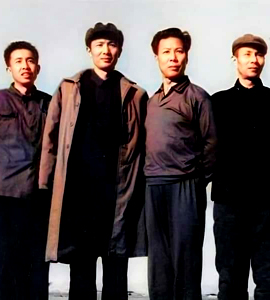
Ma's Four Masters
Mashi Sijie (Ma's Four Masters). The Four Masters of the Ma Family are represented by Ma Yingda, Ma Xianda, Ma Lingda and Ma Mingda. They are Moslem people and a famous martial arts family in China. They were born in a martial arts family in Cangzhou, Hebei. Their ancestors were either relatives or had a master relationship with the famous hero "Dadao Wang Wu" in Beijing, the great hero Ma Fen in Guandong, and the famous Shuangdao master Li Fenggang. Their father Ma Fengtu and uncle Ma Yingtu were both famous masters of Cangzhou Tongbei Piguaquan. This is the second generation head of the Ma family's Tongbei martial arts. The four brothers are known as the "Four Masters of the Ma Family" in the martial arts world.
Ma Yingda (1930-2000), famous martial artist, served as the president of Lanzhou Tongbei Martial Arts Academy.
Ma Xianda (1932-2013), famous martial artist, served as Vice Chairman of the Chinese Wushu Association and Chairman of the Shaanxi Wushu Association.
Ma Lingda (1936-2022), famous martial artist, served as Vice Chairman of the Gansu Province Wushu Association and Chairman of the Lanzhou Wushu Association.
Ma Mingda (1943-), a famous martial artist, served as Chairman of the Jiangong Academy of Guangzhou Province and Chairman of the Gansu Province Ma's Tongbei Martial Arts Association.
These four brothers were all masters of Tonbei Wuyi and Duanbing, and made great contributions to the development of these sports.
Ma Yingda passed away in 2000, Ma Xianda in 2013, and Ma Lingda in 2022. Currently, Ma Yingda's son-in-law Guo Naihui, Ma Xianda's sons Ma Lianyue and Ma Lianlun, Ma Lingda's son Ma Lianpo, and Ma Mingda's son Ma Lianzhen are still active in the martial arts world, continuing their tireless efforts to promote traditional Wushu and Tongbei Wuxue.
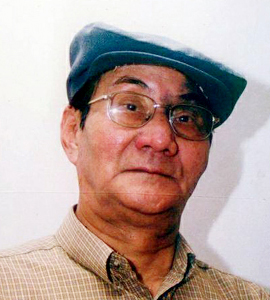
Ma Yingda
Ma Yingda (1930–2000), also known as Ma Mengcang, was the 4th generation of the Ma family and the 5th generation of Tongbei Wuyi. A Muslim. Second son of Ma Fengtu. His registered hometown was Yangshiqiao village, Dongnan township, Cangxian city, Hebei province (now part of Mengcun Muslim Autonomous Region).
From 1938 to 1943, starting at age 8, he learned the fundamentals of punching and kicking from his father Ma Fengtu; at age 10, some basic techniques of Shitang Tantui and Tongbeiquan; at age 12, from his elder martial brother Wang Tianpeng, Sitang Jiazi, Liujiaoshi, and some basic fist, staff (Gun), and spear (Qiang) techniques. At age 13, due to his fragile body and weak strength, he learned weight training (Jushisuo), chopping stick (Pidaganzi), bending techniques (Ningbiandan), and the Wuquan section of the Xingyi style from his elder martial brother.
In 1944, he learned Tongbei Momianquan, Cuibafan, Zhanzhuangfan, and Jianzongfan empty-hand forms, as well as the sword forms of Piguadao and Miaodao, from his father Ma Fengtu.
In 1945, he learned the Heihuquan form from his father Ma Fengtu and the Liuhedao sword form from elder martial brother Wang Bowen; he also learned staff techniques such as Shourangzi, Shuangshoudai, and Shoushaozi from elder martial brother Wang Tianpeng.
In 1946, his father Ma Fengtu, with the help of elder martial brother Wang Tianpeng, taught him the Bamu Duida section of the Luheqiang spear and the reciprocal Liuhe Duida technique. He learned the Dadao axe and Pofengbadao sword from martial brother Liu Ren; and the Wuyin, Qishou, and Shisanfa sections of the Biangan stick from elder brother Wang Tianpeng. That year, his father Ma Fengtu, along with martial brother Ma Xianda, taught him the Taishuquan form, Wansheng Shuangdao (double sabers), Fengtougou (hook sword), Shuangci (double pens), Quandao, and Quanjian sword forms.
In autumn 1946, Ma Yingda participated in the First Sports Games Guoshu competitions and won first place in both empty-hand and armed divisions, earning two banners.
In 1947, his father Ma Fengtu taught the Qinglongquan form to his uncle Luo Wenyuan and martial brother Ma Xianda. Along with Ma Xianda, he learned Shier Datangzi. That year he began learning Tongbei Dajiazi and Sanjiegun (three-section staff). He also learned the Biangan stick and Tipaojian sword from his uncle Luo Wenyuan, Qunyanggun staff from elder martial brother Fang Xueli, and stick forms such as Pipajiazi and Tianqipaizi from elder martial brother Liang Zicai. Alongside elder brothers Lin Tiaobian, Wang Tianpeng, his uncle Luo Wenyuan, and martial brother Ma Xianda, he practiced Putuangun staff.
In 1948, his father Ma Fengtu systematically taught him Bajixiaojia, Bajiquan, Bajiduijie, Liukai, Bazhao, and Liuzhoutou. That same year, he learned Chuojiao forms such as Yewuzhuanzhi, Lushoufan, Yizifan, and Fanquan; spear forms like Liuhedaqiang, Sibaqiang, Qiqiang; and staff/saber techniques such as Wushitu Fengmogun and Lanmenjue. From uncle Luo Wenyuan, he learned Nisigun staff; from elder brother Wang Tianpeng, Chanhai Biangan, Pichaigun, Pudaojinqiang, and Huweigunjinqiang; from elder brother Ge Chunpu, Daguaizijinqiang.
From 1949 to 1951, he accompanied the First Corps of the Chinese People’s Liberation Army into Xinjiang. During this period, he engaged with local Wushu communities, supervised them, and taught the Lianpi Pofengbadao sword to guards.
In 1950, he was transferred to the military division of the Jiuquan office in the Xinjiang military region. Under Ma Yingda’s instruction, security department personnel were trained in Tantui, Shuaijiao (wrestling), and Qinna (joint locks).
From 1951 to September 1954, he studied at the Department of Physical Education of the Northwest Teachers’ University in Lanzhou, Gansu province. He participated in the Northwest Regional National Sports Games, becoming Gansu province’s boxing champion and the Duanbing champion of the northwest region. That same year, after training camp, he represented the northwest region in the Duanbing competition at the National Sports Games held in Tianjin.
In 1954, he was assigned to the preparatory committee of the All-China Sports Federation’s Lanzhou city and Gansu province branches.
In 1955, the Municipal Sports Committee was established, and Ma Yingda worked in the group department and competition department. He was responsible for gymnastics coaching programs issued for state institutions, factories, and mines in Lanzhou, as well as grassroots inspections and supervision.
In 1956, the Provincial Sports Commission sent him to Beijing to attend the first national weightlifting coach training course. He served as chief referee in provincial and municipal wrestling competitions. That same year, at the provincial Wushu competition held in Wuwei, Ma Fengtu served as a referee, and Ma Yingda was the team coach representing Lanzhou.
In 1957, he served as a coach in the first weightlifting training course for universities and technical secondary schools in the province.
In 1958, the municipal council appointed him to prepare and serve as head of the “Lanzhou Youth Amateur Sports School.” That same year, he joined the training of the provincial Wushu team and served as its coach. After 1958, he served as chief referee and coach in all provincial and municipal Wushu competitions and sporting events.
In 1961, he spent most of his time teaching students the Tongbei martial art.
After 1964, he sought work in the healthcare system and served as a traditional Chinese medicine doctor until his retirement in 1989.
From 1965 to 1972, during the Cultural Revolution, he suffered persecution and gave private martial arts lessons at home.
In 1973, he organized four Wushu training sessions in the Chengguan district and served as head coach.
In 1979, at the National Wushu Observation Competition in Nanning, he served as referee, head of the Gansu provincial delegation, and coach of the Gansu team.
In 1981, at the National Wushu Observation Competition held in Shenyang, he served as leader of the Gansu observation group and coach of the provincial team.
In 1983, he participated in the National Wushu and Sanda Observation Competition in Nanchang as the coach of the provincial representative team.
In May 1984, he coached the Gansu provincial team at the National Wushu Observation Competition held in Xi’an.
In 1985, he coached the Gansu team at the National Workers’ Games held in Hangzhou and received the National Outstanding Referee Award from the National Sports Commission.
In 1987, he served as the coach of the Gansu team at the National Wushu Observation Competition in Lanzhou. The Gansu team achieved excellent results in the national Wushu competitions and won many excellence awards for Piguaquan, Fanziquan, Chuojiao, Bajiquan, Piguadao, Yunmojian, Tongbeidadao, and Biangan, including the “Outstanding Group Performance Award” for group Bajiquan and group Biangan.
In 1994, the Lanzhou Tongbei Wushu Academy was established, and he became its president.
Among Ma Yingda’s students are: Zhang Kejian, Wang Degong, Wang Fuan, Guo Naihui, Zhou Jianrui, Kang Guoshou, Li Yongqian, Sun An, Kang Wei, Zhang Hongmou, Bo Fude, Hou Shunzi, Liu Ke, Wang Chuncheng, Zhang Feipeng, Zhang Feihu, Yao Jianzhong, Li Yanming, Wang Benxing, Li Senlin, and others.
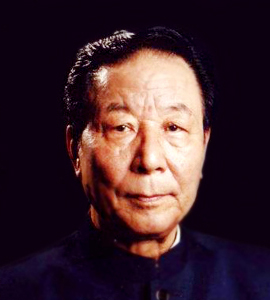
Ma Xianda
Ma Xianda (1932-2013), the fourth generation of the Ma family. Moslem nationality, from Yangshiqiao, Southeast Township, Cang County, Hebei Province (now part of Mengcun Hui Autonomous County). The third son of Ma Fengtu and nephew of Ma Yingtu. He is the fifth generation inheritor of the Tongbei Wuxue. He was born into a family of martial artists, with six generations of his family inheriting and practicing martial arts, making him a prominent family in the Chinese martial arts world. He is one of the Four Masters of the Ma Family.
Wushu professor, Wushu educator, one of the first national referees in China, Wushu 9th Duan master, and one of the most famous contemporary authorities on Chinese Wushu. He is the contemporary master and head of the famous Chinese martial arts school "Tongbei".
He learned Wushu from his father, the Wushu master Ma Fengtu, when he was young, and was deeply influenced and guided by his second uncle Ma Yingtu (one of the most famous martial artists in China in the 1930s and 1940s). He received the true teachings from his father, and specialized in such authentic arts as "Tongbei Pigua", "Kaimen Baji", "Bashanfan", "Chuojiao", "Jiuzi Tanglangshou", "Taizu Bazhanshou", and such authentic arts as "Liuhe Daqiang", "Qiqiang", "Fengmogun", "Shuangshoudao", "Tongbei 73 Jian, Tongbei Tipaojian (Tongbei Xiaojian)", "Piguadao", etc. He was especially influenced by the "Niusi" series and "Putuan" series of stick methods passed down by his uncle Luo Wenyuan. The "Ma Family Biangan" style he studied, which is famous in the Chinese and foreign martial arts circles, is unique and is the most proud of what was taught by Mr. Ma Xianda. It is known as "Majiaquan and Majia Biangan", which are unique in the martial arts world. For nearly half a century, "Majiaqan" (including weapons) has become a Wushu style pursued, yearned for and loved by martial arts enthusiasts. In order to inherit and develop Chinese Wushu, he also practiced boxing, wrestling, and fencing, and systematically studied physical education. "Broad learning" is for "specialization."
In 1952, he won the first Chinese Wushu Leitai competition (Sanshou) championship since 1949. Ma Xianda, who was less than 20 years old, defeated Tongbi master Deng Hongzao and Chuojiao master Li Xuewen with his undefeated record, and became famous in the Chinese martial arts world. At the same championship, he won the Chinese Duanbing Combat Championship and the Gold Medal for Wushu Performance. It fully highlights the comprehensive martial arts masters who have mastered the comprehensive skills of Pi (Duanbing), Da (Sanshou) and Lian (Taolu).
In the spring of 1953, he won the North China (Beijing, Tianjin, Hebei, Shanxi, Inner Mongolia) Duanbing championship; in the autumn of 1953, he won the national Duanbing combat championship without losing a single round.
After graduating from university in 1954, he worked as an assistant and lecturer in the Department of Physical Education at Shaanxi Normal University. He was later transferred to Xi'an Physical Education Institute to teach martial arts, boxing, and fencing courses, and served as director of the teaching and research department, associate professor, and professor.
In 1962, the departments and faculties were restructured, and Ma Xianda joined the Department of Physical Education of Shaanxi Normal University and became the head of the Wu Shuizhong Research Laboratory. He has taught at the school for 30 years and has taught nearly 10,000 Chinese and foreign students. During his coaching career, he served as chief referee, chief judge, and director of the arbitration committee of the All-China Wushu Competition many times.
In 1972, the national Wushu competition was restored and held, and he was invited by the State Sports Commission to serve as the chairman of the general review of the conference.
In 1973, he was commissioned by the State Sports Commission to revise the "1973 Wushu Competition Rules". He was the chief editor of the "Wushu Rules" issued by the state, and revised and established the "Wushu Rules" many times. He has become one of the most authoritative scholars in Chinese Wushu and one of the few renowned martial artists in the country. Over the decades, he has trained a large number of Wushu talents, who have become the backbone of the Chinese Wushu community, including renowned professors, master's and doctoral supervisors, and national-level coaches.
In 1980, he served as the head of the martial arts coaching team and chief Wushu instructor for "Shaolin Temple", the first Kungfu film since the 1940s. Famous martial arts stars such as Jet Li and Zhao Changjun have also been taught by Mr. Ma Xianda. The set of Fanziquan that Jet Li loves and often practices was taught by Mr. Ma himself.
In 1981, he took charge of the compilation of the Wushu branch section of the "Sports Volume of the Encyclopedia of China" and served as the deputy editor-in-chief of the branch section. Mr. Ma Xianda is a man of both literary and martial talents. Besides teaching martial arts, he has also written many books, including dozens of academic papers such as "Shaolin Temple and Bodhidharma in the History of Chinese Wushu." He is the chief author of "Basic Exercises in Wushu (I)", "Tongbeiquan" (Japanese version), the novel "The Legend of Dadao Wang Wu" about a historical figure in Wushu, and the film script "Dadao Wang Wu". He is also the chief editor of "Chinese Wushu Dictionary", the first large-scale (1.2 million words) Wushu dictionary in the history of Chinese Wushu.
In 1983, he served as the chief judge and chief referee of the "National Wushu Performance Observation and National Sanshou Competition" held in Nanchang, and completed the task brilliantly. This is the only case of him holding two positions in a national competition.
In 1985, he first visited Japan and served as the deputy head of the "Chinese Wushu Delegation" formed by the China Association for Friendship with Foreign Countries. He also gave a performance. Japan's "Budo" magazine called Ma Xianda "the number one Chinese Wushu practitioner today." In 1985, the State Sports Commission of China awarded him the "New China Sports Pioneer Award."
In 1988, he won the "Wushu Contribution Award" at the China International Wushu Festival.
In 1995, he was named one of the "Top Ten Famous Wushu Professors in Contemporary China" by the Chinese Wushu Association and the National Wushu Management Center.
In 1998, he was awarded the highest rank in Chinese Wushu by the National Wushu Management Center - 9th Duan.
Retired in 2001.
In recognition of Ma Xianda's achievements and contributions to Wushu, he has been appointed Vice Chairman of the Shaanxi Provincial Sports Committee, Executive Vice Chairman of the Shaanxi Provincial Sports Federation, Member of the All-China Sports Federation, Member of the China Sports Development Strategy Research Committee, Vice Chairman of the Chinese Wushu Association, and Chairman of the Shaanxi Wushu Association. He also served as a member of the Standing Committee of the Sixth and Seventh Shaanxi Provincial Committees of the Chinese People's Political Consultative Conference.
Professor Ma Xianda, though already in his seventies, still works tirelessly on the front lines of Wushu education, diligently cultivating successors. He also buried himself in his desk, writing books. His first monograph on Chinese short weapons - "Chinese Duanbing" is about to be published. Afterwards, more than ten works including "Chinese Baji", "Ma Family Fanzi", "Ma Family Pigua", and "Chinese Changbing" will be introduced to the Chinese and foreign Wushu circles one after another.
On June 17, 2013, Comrade Ma Xianda passed away in Xi'an, Shaanxi Province, China due to illness at the age of 81.
Ma Xianda's disciples include Ma Lianyue, Ma Lianlun, Gao Xian, Li Lianjie, Zhao Changjun, Ma Wenguo, Li Tang, Qu Yulin, Bai Hongshun, Li Senlin, Ma Junxiang, Masanori Kobayashi, Narcyz Latecki and others.
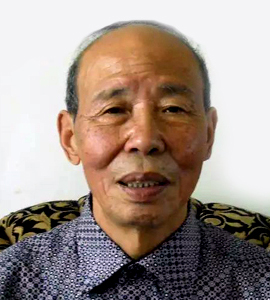
Ma Lingda
Ma Lingda (1936-2022), the fourth generation of the Ma family. Moslem nationality, from Yangshiqiao, Southeast Township, Cang County, Hebei Province (now part of Mengcun Hui Autonomous County). The fourth son of Ma Fengtu and nephew of Ma Yingtu. He is the fifth generation inheritor of the Tongbei Wuxue. He comes from a family of Wushu. His family has been passing down and practicing Wushu for six generations and is a prominent family in the Chinese martial arts world. One of the four masters of the Ma family.
He learned martial arts from his father Ma Fengtu since he was young, and was proficient in Tongbei, Pigua, Baji, Fanzi, and Chuojiao. He was good at Sanda and Duanbing, especially Sanda and Duanbing. As a teenager, he won many championships in Duanbing combat, Sanshou combat, and boxing competitions held in Gansu Province and Lanzhou City. He graduated from Lanzhou Institute of Physical Education.
In 1953, he participated in the Wushu competition in Lanzhou City, Gansu Province, won an award, and represented Gansu Province in the Wushu performance at the Northwest National Sports Games.
Since 1956, he has served as coach of Gansu Province Fencing Team, Boxing Team and Sanda Team. It is famous for its Tongbei Wuyi, boxing and Sanda, and has trained a large number of comprehensive talents who are proficient in both fighting and training, with its influence reaching both home and abroad.
In 1957, because he won the first place in the provincial Wushu Duanbing competition, he was selected by the provincial and municipal sports committees to be sent to the National Sports Commission to participate in the first national fencing coach training class.
In 1958, he served as the coach and athlete of Lanzhou Fencing Team and won the first place in sabre in the provincial competition. He was appointed as the coach of Gansu Fencing Team and trained athletes to win the eighth place in foil in the first National Games.
Since 1959, he has led Lanzhou Wushu, fencing, boxing and Sanda to win first place in the team and individual competitions in the province many times.
In 1973, he served as the head coach of the provincial fencing team and participated in the 3rd National Games. Team member Yang Shubin was selected into the national training team.
After 1980, he served as the head coach of Gansu Fencing Team and Boxing Team for many times, and founded and organized Gansu Sanda Team, serving as the head coach.
He participated in the National Wushu Sanda Seminar twice from 1982 to 1983.
Since 1983, he has served as a national Wushu Sanda referee and conducted research work many times. During his time as a Wushu Sanda coach, his students Yang Tiancheng and Wei Binjiu won second place in two levels in the 1982 National Sanda Competition. In 1983, his student Sun Yuxiang tied for first place in the National Sanda Competition.
From 1986 to 1996, he served as director of the Competition and Training Department of Lanzhou Sports Center, and concurrently served as deputy secretary-general of Lanzhou Sports Federation.
In 1987, he won the Gansu Province Outstanding Achievement Award for Popularizing Amateur Wushu Activities.
In 1988, he was named a sports activist and an advanced worker in Lanzhou employee sports by the Gansu Provincial Sports Federation.
In 1989, he was named an advanced worker in amateur training by Gansu Province. He was named a national outstanding Wushu trainer. He serves as the Secretary-General of Lanzhou Wushu Association and Vice Chairman of Lanzhou Heavy Athletics Association.
In 1994, he founded Gansu Boxing Sports School and Gansu Security Training Party School and served as vice president.
In 1996, he was awarded the title of national honorary Wushu referee.
In 2019, he was elected honorary chairman of the Lanzhou Wushu Sports Association.
On December 15, 2022, he died of illness at home at the age of 87.
Ma Lingda's disciples include Ma Lianpo, Ma Lihong, Zhou Jianrui, Guo Naihui, Hou Shunzi, Yang Tiancheng, Wei Binjiu, Sun Yuxiang, Zhang Xigui and others.
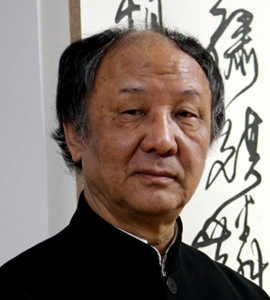
Ma Mingda
Ma Mingda (1943-), the fourth generation of the Ma family. Moslem nationality, born in Lanzhou, Gansu Province, and a native of Yangshiqiao, Southeast Township, Cang County, Hebei Province (now part of Mengcun Hui Autonomous County). The fifth son of Ma Fengtu. The fifth generation inheritor of the Tongbei Wuxue. One of the four master of the Ma family.
A renowned historian, Wushu theorist, and historian of Wushu. He also served as President of the Guangdong Wushu Culture Research Association, First Vice President of the Guangzhou Hui Nationality History and Culture Research Association, First Vice President of the Guangzhou National Sports Association, and President of Jiangong Academy.
When he was young, he learned Piguaquan, Bajiquan, Fanziquan, Chuojiao, Shuangshoudao, Fengmogun, Qiqiang, and Luheqiang from his father Ma Fengtu.
From 1958 to 1963, he served in the Gansu Provincial Sports Commission.
In 1959, he won the championship in the Gansu Youth Wushu Competition.
He graduated from the History Department of Gansu Normal University (now Northwest Normal University) in 1967.
From 1968 to 1972, he worked at the No. 1 Middle School of the Seventh Construction Bureau of Gansu Province.
From 1972 to 1978, he worked in the Department of Physical Education of Northwest Normal University in Gansu.
From 1981 to 1992, he taught in the History Department of Lanzhou University.
He completed his master's degree in History at Lanzhou University in 1987.
Since 1993, he has been transferred to the History Department of Jinan University in Guangzhou to teach, and is currently a professor and doctoral supervisor.
He researches and teaches Chinese cultural history, ethnic history, and the history of Sino-foreign relations, with a focus on the Yuan, Ming, and Qing dynasties. He has edited and co-edited books such as "Chinese Wushu Dictionary," "Guanghe County Chronicles," and "Collection of Chinese Hui Calendars." Over the years, he has published more than 100 papers on ancient Chinese history, ethnic history and Wushu history, contributing rich research results to the academic community.
Published books include: Jixiao Xinshu in 1988, Encyclopedia of Chinese Wushu in 1990, Collection of Chinese Hui Calendar in 1996, Collection of Essays on Swords in 2000, and Exploring the Truth of Martial Arts in 2003.
Ma Mingda's disciples include Ma Lianzhen, Liu Cungang, Liu Baolu, Li Senlin, Zhang Feipeng, Sun An and others.






Tongbei Wuyi
Copyright © International Tongbei Wuyi Union